Premium Brands Aren't Always Best Conference Projectors Suppliers
- Aarav Reddy
- Mar 19
- 8 min read

There is a default assumption that runs through a significant portion of B2B AV procurement. It sounds reasonable on the surface: if you buy from the most recognized brand, you are buying the best product, the most reliable supply chain, and the strongest after-sales support. You are making the safe choice.

For B2B buyers who are serious about building a procurement strategy that performs across varied client environments and commercial conditions, understanding where conference room projectors suppliers — premium or otherwise — actually deliver value is more useful than brand loyalty alone.
This article examines the real trade-offs in projector supplier selection for commercial environments, with practical guidance for resellers, distributors, and procurement professionals who want to make better-informed decisions.
Where the Premium Brand Assumption Comes From
The instinct toward premium brands is not irrational. It is built on a set of experiences and market signals that have real validity in specific contexts.
Enterprise clients with formal procurement policies sometimes specify particular brands by name, driven by IT standardization requirements or existing vendor agreements. In those environments, the brand specification is a constraint, not a choice — and navigating it is simply part of the project scope.
In other contexts, the premium brand preference reflects a genuine quality differential. Established manufacturers with significant R&D investment do produce products with measurable performance advantages in specific categories — particularly at the upper end of brightness, color accuracy, and laser light source longevity.
The problem is not that premium brands lack merit. The problem is when brand recognition becomes a substitute for specification analysis — when buyers choose a supplier based on name familiarity rather than on whether the product and the supplier relationship actually fit the requirements of the specific deployment.
The Specification Mismatch Problem
One of the most common and costly errors in conference room projector procurement is over-specification driven by brand loyalty. A buyer who defaults to a premium brand's flagship product for a standard meeting room environment is paying for capabilities — brightness levels, color gamut, resolution — that the environment cannot utilize and the client will never notice.
The performance difference between a well-specified mid-tier projector and a premium flagship unit in a typical corporate meeting room with standard ambient light conditions and a 100-inch screen is, in most cases, not perceptible to the people using the room. The price difference is very perceptible on the invoice.
This is not an argument against premium products. It is an argument for matching specification to requirement — which sometimes leads to a premium product and sometimes does not.
What Premium Pricing Actually Buys You — and What It Does Not
Understanding what you are paying for when you source from a premium brand supplier helps clarify when that premium is justified and when it is not.
What the Premium Typically Reflects
Established brands invest heavily in optical engineering, thermal management systems, and light source technology. At the high end of commercial AV — large venue installations, digital signage, high-ambient-light environments, and mission-critical presentation spaces — this investment translates into measurable performance advantages that justify the price differential.
Premium brands also typically offer broader product ecosystems — lenses, mounts, control interfaces, and management software — that integrate with their core projection products. For large-scale or technically complex installations, this ecosystem coherence has genuine value.
Manufacturer warranty infrastructure from established brands is generally more robust than from newer or smaller suppliers. Authorized service centers, spare parts availability, and firmware support lifecycles tend to be longer and better resourced with major manufacturers.
What the Premium Does Not Always Deliver
Premium brand pricing does not automatically translate into better distributor or reseller commercial terms. In many cases, the opposite is true. Established brands with dominant market positions have less commercial incentive to offer flexible MOQs, competitive trade credit, or preferential lead time arrangements to mid-scale resellers. Their distribution frameworks are often designed for large-volume national distributors — not for the SME reseller who is building a client base incrementally.
AV equipment wholesalers who carry a broader range of brands — including well-specified alternatives to the premium tier — often offer more commercially workable terms for resellers at scale, while still providing product that meets the technical requirements of most standard commercial installations.
Premium brand supply chains are also not immune to constraint. Allocation shortages, component supply disruptions, and regional distribution gaps affect established manufacturers as much as smaller ones — and in some cases, the rigidity of their distribution frameworks makes those disruptions harder to work around than they would be with a more flexible supply partner.
The Case for Specification-First Sourcing
The practical alternative to brand-first sourcing is specification-first sourcing — a procurement approach that begins with a clear definition of what the installation environment requires and works backward to identify which suppliers and products genuinely meet those requirements.
This approach requires more discipline at the front end of the procurement process. It requires documenting room dimensions, ambient light conditions, screen size, throw distance constraints, connectivity requirements, and expected usage patterns before engaging any supplier. It requires comparing products across those defined parameters rather than filtering first by brand.
The reward for that discipline is a procurement decision that is defensible on technical and commercial grounds — not just on brand familiarity.
How to Define Requirements for a Standard Commercial Installation
For a typical corporate conference room — ten to twenty seats, standard fluorescent or LED ambient lighting, screen size in the 100 to 120 inch range — the specification requirements are well within the capability of a wide range of products across multiple price tiers.
Brightness requirements in this environment typically fall in the 3,000 to 5,000 lumen range, depending on ambient light levels. Resolution requirements for standard presentation content are met by 1080p products, with 4K adding cost without proportional benefit for most corporate applications. Connectivity requirements center on HDMI, USB-C, and wireless presentation capability for modern conferencing platforms.
A conference room equipment suppliers evaluation that begins with these parameters will identify a meaningful range of products — from multiple brands across multiple price points — that meet the technical requirements. The selection decision can then be made on commercial terms, supplier reliability, after-sales capability, and total cost of ownership rather than brand alone.
Larger and More Demanding Environments
It is important to acknowledge where the premium brand argument becomes stronger. In environments with high ambient light — training rooms with floor-to-ceiling windows, auditoriums, exhibition spaces — brightness requirements increase significantly, and the optical quality of the projection system matters more.
In these environments, the performance differential between a well-engineered premium product and a lower-tier alternative is real and perceptible. The procurement logic shifts accordingly — and sourcing from a supplier with genuine expertise in high-performance projection becomes more clearly justified.
The key is applying this logic selectively, based on actual environment requirements — not applying it universally across all procurement decisions because it feels like the safe default.
Evaluating Alternative Suppliers Without Compromising Standards
Broadening your supplier evaluation beyond premium brands does not mean accepting lower standards. It means defining standards clearly and applying them consistently, regardless of who manufactures the product.
The evaluation criteria for any projector supplier — premium or otherwise — should cover product performance against defined specifications, manufacturer warranty terms and service infrastructure, authorized distribution credentials, spare parts and firmware support lifecycle, and commercial terms that work for your business model.
A supplier who meets these criteria with a product that is priced 20 to 30 percent below the premium tier equivalent is not a compromise. They are a better commercial decision for the deployment context in question.
The Role of Authorized Distribution in Alternative Brand Sourcing
One of the legitimate concerns about sourcing outside premium brands is product authenticity and warranty validity. This concern is real but addressable.
When sourcing from alternative manufacturers, the same authorization requirement applies as with premium brands: confirm that your wholesale supplier is an authorized distributor for the product lines they carry. Authorized distribution ensures product authenticity, valid warranty support, and access to manufacturer technical resources.
The authorization requirement is not brand-specific. It is a procurement standard that applies universally — and it is the single most effective safeguard against the grey-market and unauthorized product risks that give some buyers pause when evaluating non-premium suppliers.
Building a Multi-Brand Procurement Strategy
For resellers and distributors who serve varied client environments, a multi-brand procurement strategy — with clearly defined deployment tiers and supplier relationships to match — is often more commercially effective than a single-brand approach.
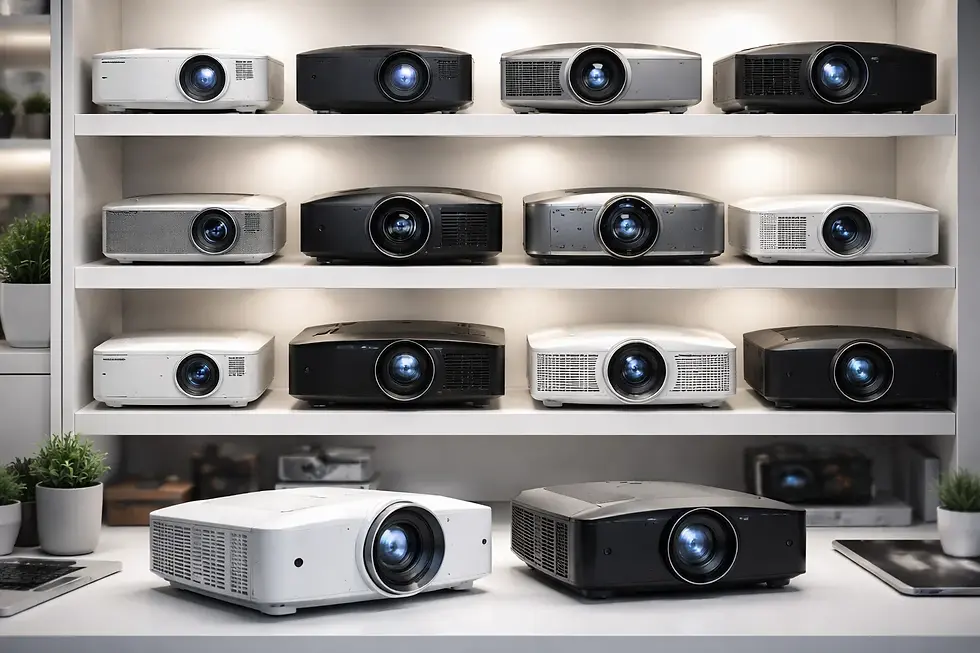
A tiered model might position a premium brand product for high-ambient-light and large-venue environments where performance differentiation is genuine, a well-specified alternative for standard corporate meeting room environments where total cost of ownership is the primary driver, and a third tier for budget-constrained deployments where specification requirements are modest and client budget is the binding constraint.
Each tier has a supplier relationship behind it. Each supplier relationship is evaluated and maintained with the same rigor — authorization credentials, commercial terms, warranty infrastructure, lead time reliability. The differentiation is in product selection for deployment context, not in procurement standards.
This approach allows resellers to compete effectively across a wider range of client briefs without over-specifying — and over-pricing — every installation, or compromising standards to win budget-sensitive work.
Conclusion
The instinct toward premium brands in conference room projector procurement is understandable. It reflects a genuine desire to protect client relationships and deliver reliable installations. But when that instinct becomes an automatic default rather than a considered decision, it creates commercial inefficiency without necessarily improving outcomes.
The most effective procurement approach — for resellers, distributors, and B2B buyers across the AV space — is one that begins with clear specification requirements, evaluates suppliers on technical capability and commercial fit, and makes brand selection a variable within that framework rather than the framework itself.
Premium products earn their place when the deployment environment genuinely requires what they deliver. In the many environments where it does not, working with AV equipment wholesalers who carry a well-curated range across multiple brands and price tiers gives you the commercial flexibility and procurement precision to serve your clients better — and build a more sustainable business in the process.
Frequently Asked Questions
How do I justify to a client why I am not specifying a premium brand they have heard of? Ground the conversation in specification and performance data rather than price. Show the client how the product you are specifying meets or exceeds the technical requirements of their specific environment — brightness, resolution, connectivity, throw distance. Demonstrate that it carries valid manufacturer warranty and is sourced through authorized distribution channels. Clients who understand the specification rationale rarely insist on a brand name when a better-matched product is clearly presented.
Are there specific installation types where premium brand projectors are genuinely the better procurement choice? Yes. High-ambient-light environments, large venue installations, mission-critical presentation spaces, and deployments requiring advanced color accuracy or very high brightness output are all contexts where premium manufacturer investment in optical and thermal engineering delivers measurable performance advantages. The procurement principle is to match specification to environment — which in these cases does point toward the premium tier.
How should resellers handle clients whose IT procurement policy specifies a particular brand? Treat it as a project constraint and source accordingly. If a client's IT policy specifies a particular manufacturer, your role is to source the right product within that specification through a reliable, authorized supply chain — not to challenge the policy. The brand-first evaluation framework outlined in this article applies to procurement decisions where the reseller has genuine discretion. Where a client specification exists, it supersedes the framework.
What is the most reliable way to verify that an alternative brand projector will integrate with a client's existing conferencing platform? Request compatibility documentation from the supplier or manufacturer directly — most credible manufacturers publish integration compatibility lists for major conferencing platforms. Where possible, test the specific unit with the client's platform before installation rather than relying solely on published documentation. This pre-installation verification step is standard practice for technically rigorous resellers and significantly reduces the risk of post-installation compatibility issues.


Comments