Sewing Machines distributors Tamil Nadu powering apparel growth
- Aarav Reddy
- Feb 17
- 4 min read

Apparel manufacturing in India is evolving rapidly. Export demand is rising. Domestic brands are scaling. Startups are entering the market with bold ambitions. Yet, behind every successful apparel business lies one often overlooked factor—machinery reliability.
When production lines move smoothly, growth feels natural. When machines fail, growth stalls.
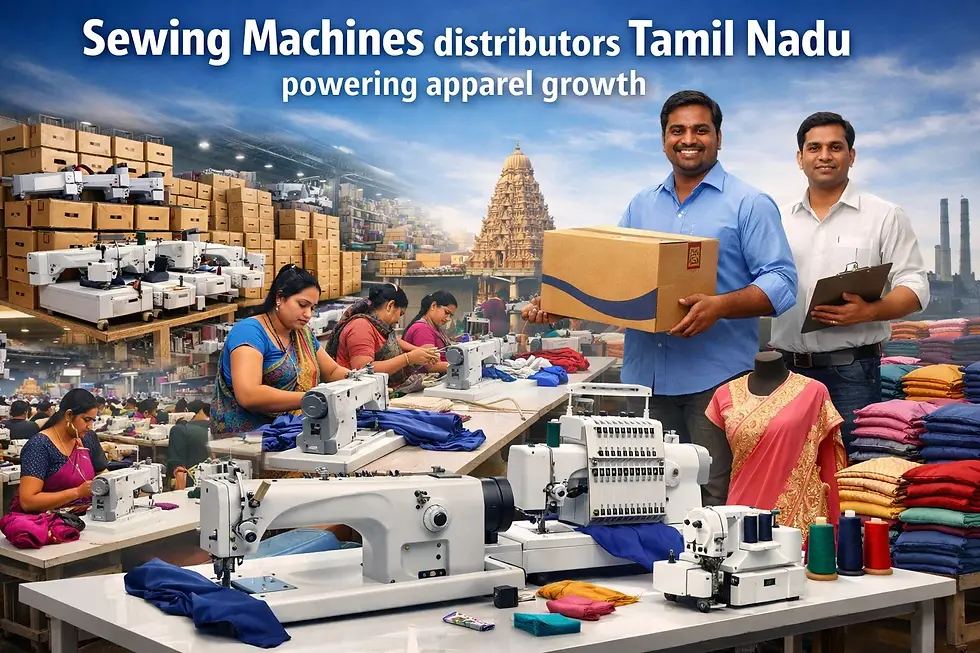
This is why Sewing Machines distributors Tamil Nadu are playing a central role in powering apparel growth across small and mid-sized enterprises. Their contribution goes beyond equipment supply. They provide technical depth, lifecycle guidance, and structured support that strengthen manufacturing foundations.
If you're building or expanding an apparel unit, understanding this ecosystem advantage can help you grow with confidence.
The Apparel Sector’s Growth Momentum
India’s apparel industry continues to expand across:
Knitwear exports
Athleisure production
Private label manufacturing
Sustainable textile initiatives
Domestic fashion brands
As demand grows, factories must increase output while maintaining consistent quality.
Scaling production requires more than adding labor—it requires dependable machinery systems.
That’s where structured distributor networks become essential.
Why Machinery Reliability Drives Growth
In apparel manufacturing, uptime equals opportunity.
Reduced Downtime, Higher Output
Frequent breakdowns cause:
Missed deadlines
Overtime costs
Export penalties
Client dissatisfaction
Reliable distributors ensure faster service response and spare parts availability, reducing operational disruptions.
Stable uptime directly supports growth targets.
Consistent Stitch Quality
Apparel brands rely on uniform stitching to maintain quality standards.
Proper machine calibration and technical support ensure:
Even seam density
Reduced thread breakage
Minimal rework
Lower defect rates mean higher sellable output.
Growth thrives on consistency.
Ecosystem Strength: Tamil Nadu’s Advantage
Tamil Nadu is deeply integrated into India’s textile value chain.
The region supports:
Spinning mills
Fabric processors
Garment exporters
Skilled technicians
Engineering workshops
When distributors operate within this environment, they gain firsthand exposure to factory conditions.
They understand production urgency, export compliance requirements, and scaling challenges.
Experience within an ecosystem strengthens decision-making.
Standardization: Supporting Scalable Apparel Units
As apparel businesses expand, complexity increases.
One key contribution of Industrial Sewing Machines dealers Coimbatore is guiding factories toward machine standardization.
Why Standardization Matters
Standardized machine models provide:
Easier operator training
Simplified maintenance
Consistent performance
Reduced spare parts inventory
When every production line follows similar specifications, scaling becomes smoother.
Standardization reduces friction during growth.
Energy Efficiency and Margin Protection
Growth without cost control can strain profitability.
Power consumption rises significantly as factories expand.
Collaboration with Electric Sewing Machine Suppliers in chennai allows apparel manufacturers to integrate energy-efficient machines from the beginning.
Modern systems offer:
Servo motors
Reduced idle power usage
Lower heat generation
Speed control adjustments
Lower energy usage reduces monthly operating costs, especially in multi-shift factories.
Operational efficiency protects margins while output increases.
Supporting SMEs Through Structured Expansion
Small and mid-sized enterprises often face challenges when moving from 30 to 100 machines.
Distributors with ecosystem knowledge support growth through:
Phased procurement strategies
Infrastructure readiness assessment
Power load planning
Operator training sessions
This structured approach prevents chaotic expansion.
Growth becomes planned, not reactive.
Faster Spare Parts Access Means Fewer Delays
In apparel manufacturing, even a minor machine component delay can affect shipment schedules.
Local spare parts availability reduces:
Waiting periods
Production backlog
Emergency freight costs
Reliable spare parts networks contribute directly to production stability.
Production stability strengthens client relationships.
Preventive Maintenance Culture
Forward-thinking distributors promote preventive maintenance rather than emergency repairs.
Scheduled servicing includes:
Belt alignment checks
Motor calibration
Tension adjustments
Wear component inspection
Factories that adopt preventive systems experience fewer breakdowns and smoother production cycles.
Prevention sustains growth.
Real-World Growth Example
Consider a mid-sized knitwear exporter operating 60 machines.
Initial challenges included:
Inconsistent stitch quality
Rising electricity bills
Frequent minor breakdowns
After consolidating sourcing and service through experienced regional distributors:
Machines were standardized
Energy-efficient systems were introduced
Preventive maintenance schedules were implemented
Within a year:
Output increased steadily
Energy expenses stabilized
Rework rates declined
Growth became predictable rather than stressful.
Predictability builds confidence in scaling.
Relationship-Based Trade Culture
One often underestimated factor behind apparel growth is trust.
Distributors embedded in industrial ecosystems build long-term relationships with manufacturers.
Over time, this leads to:
Flexible payment arrangements
Priority stock allocation
Faster service response
Transparent communication
Trust reduces uncertainty during peak production seasons.
Stability encourages expansion.
Key Considerations for Apparel Entrepreneurs
If you're aiming for growth, evaluate these factors carefully:
1. Service Responsiveness
Ask about average technician response time.
2. Spare Parts Availability
Confirm local inventory access.
3. Energy Consumption Profile
Request detailed power usage data.
4. Scalability Support
Choose partners capable of supporting long-term expansion.
Growth requires structured partnerships—not isolated purchases.
The Bigger Picture: Apparel Growth Through Operational Strength
The influence of <a href="https://www.pepagora.com/en/ns-sewing-machine-and-co">Electric Sewing Machine Suppliers in chennai</a> and established distributor networks reflects a broader industry shift.
Apparel manufacturers are prioritizing:
Lifecycle cost evaluation
Operational reliability
Energy efficiency
Standardized systems
Long-term service partnerships
Machinery decisions now shape strategic growth plans.
Operational strength drives market competitiveness.

Conclusion
Apparel growth isn’t powered by ambition alone—it’s powered by reliable systems.
By working with Sewing Machines distributors Tamil Nadu who understand industrial realities, manufacturers build stable foundations for expansion.
Reliable machines reduce downtime. Energy-efficient systems protect margins.Preventive maintenance ensures consistency.Standardization simplifies scaling.
In today’s competitive B2B environment, apparel success belongs to those who invest in dependable infrastructure.
Growth becomes sustainable when operational strength leads the way.
FAQs
1. Why are sewing machine distributors important for apparel growth?
They ensure machine reliability, faster service response, and structured scaling support.
2. How does energy efficiency impact apparel factories?
Lower electricity consumption reduces operating costs, especially in high-volume production units.
3. What is machine standardization in garment manufacturing?
Using similar machine models across production lines to simplify maintenance and improve consistency.
4. Why is preventive maintenance important?
It reduces unexpected breakdowns and stabilizes production schedules.


Comments