Startup Wins with Electric Sewing Machine Suppliers in Chennai
- Aarav Reddy
- Feb 17
- 4 min read

Starting a garment or textile business is exciting—but let’s be honest—it’s also risky.
Margins are tight. Orders are unpredictable. Skilled labor is limited. And every capital investment matters. For early-stage manufacturers, the wrong equipment decision can stall growth before it even begins.
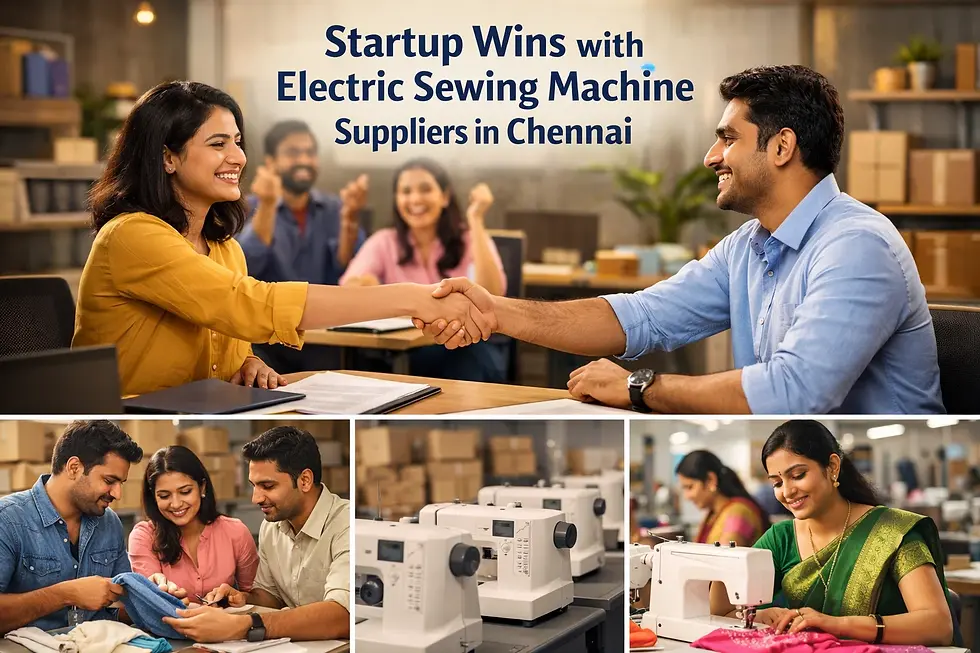
That’s why many new entrepreneurs are turning to Sewing Machines distributors Tamil Nadu as part of their early research process. But when it comes to operational efficiency and long-term savings, Electric Sewing Machine Suppliers in chennai are increasingly becoming the preferred choice for startups aiming to scale responsibly.
The real win isn’t just buying a machine. It’s building a production system that supports stability, energy efficiency, and consistent output from day one.
Let’s explore how startups are gaining an edge through smarter sourcing decisions.
Why Equipment Decisions Define Startup Survival
In the early stages of manufacturing, every machine directly impacts:
Cash flow
Productivity
Labor efficiency
Delivery timelines
Customer satisfaction
Unlike large factories, startups don’t have margin for repeated mistakes.
Choosing reliable electric machines reduces risk and improves operational confidence.
Lower Energy Costs from Day One
Energy expense is one of the most underestimated startup costs.
Servo Motor Advantage
Modern electric machines often include servo motors that:
Consume power only when stitching
Reduce idle electricity usage
Operate quietly
Generate less heat
For a startup running 10–20 machines, small per-unit energy savings add up quickly.
Lower electricity bills protect early-stage cash flow.
Reduced Cooling Requirements
Because energy-efficient machines generate less heat, factories require less ventilation or cooling effort.
That’s another indirect cost saving many founders overlook.
Consistent Output Builds Early Reputation
Startups survive on reputation.
Inconsistent stitching or frequent machine breakdowns can:
Delay orders
Damage client trust
Increase rework
Reduce repeat business
Reliable electric machines help ensure consistent stitch density and stable speed control.
Quality consistency earns trust.
Trust drives repeat orders.
Simplified Maintenance for Small Teams
Most startups operate with lean teams. There isn’t always a full-time technician available.
Partnering with experienced Industrial Sewing Machines dealers Coimbatore often complements supplier support by ensuring:
Proper installation
Initial calibration
Operator training
Maintenance guidance
Electric machines typically require less mechanical adjustment compared to older clutch motor systems.
Fewer mechanical complexities mean fewer disruptions.
That simplicity matters when your workforce is small.
Faster Learning Curve for Operators
New businesses often hire operators with varying experience levels.
Electric machines offer:
Adjustable speed control
Smooth start-stop functionality
Lower vibration
This makes it easier for new operators to learn and maintain quality.
Lower error rates reduce fabric wastage—an important cost control factor for startups.
Training efficiency improves productivity without adding headcount.
Scalability Without Operational Shock
Startups that succeed quickly often struggle during rapid growth.
The advantage of starting with energy-efficient electric machines is future scalability.
When expanding from 10 to 40 machines:
Power load remains manageable
Speed consistency is maintained
Maintenance routines stay standardized
Structured suppliers guide startups toward scalable machine models rather than short-term low-cost alternatives.
That foresight prevents painful reinvestment later.
Financial Discipline and Smarter Capital Allocation
Early-stage businesses must manage capital carefully.
Lower Operating Cost = Higher Survival Rate
Electric machines may carry slightly higher upfront investment compared to traditional alternatives, but they reduce:
Monthly energy expenses
Repair frequency
Production interruptions
Lower operational cost improves long-term financial stability.
Phased Procurement Strategy
Instead of buying all equipment at once, structured suppliers recommend phased purchases aligned with confirmed orders.
This approach prevents idle equipment and protects liquidity.
Smart procurement builds resilience.
Real Startup Scenario: Building Strong Foundations
Consider a small apparel startup launching with 15 machines.
Initially, the founders focused purely on price and chose outdated models. Within months, they faced:
Rising electricity bills
Frequent belt adjustments
Stitch inconsistencies
Delivery delays
After upgrading to electric systems through structured suppliers:
Energy consumption stabilized
Maintenance demands decreased
Operator efficiency improved
Output became consistent
Within one year, the business scaled to 35 machines confidently.
The shift wasn’t dramatic—but it was sustainable.
Competing in a Crowded Market
Startups face intense competition from established manufacturers.
To compete effectively, they must:
Deliver consistent quality
Maintain reliable timelines
Control operational costs
Electric machines provide stability that supports these goals.
In competitive B2B markets, reliability is more valuable than aggressive pricing.
Practical Tips for Startup Founders
If you're launching or scaling a garment unit, consider these steps:
1. Evaluate Energy Consumption Before Purchase
Request detailed power usage specifications.
2. Prioritize Operator-Friendly Machines
Smooth speed control reduces training time.
3. Plan for Scalability
Choose machine models you can standardize during expansion.
4. Ask About Service Support
Confirm spare parts availability and technician access.
5. Think Long-Term, Not Just Low Cost
Lifecycle cost matters more than upfront price.
Strategic planning in the first year determines survival in the third.
The Bigger Picture: Building Sustainable Growth
The rise of Electric Sewing Machine Suppliers in chennai reflects a shift in startup thinking.
Founders are moving away from short-term cost-cutting toward:
Energy efficiency
Structured scaling
Operational stability
Long-term margin protection
Early equipment decisions influence everything that follows—quality, productivity, and brand credibility.
Smart sourcing lays a foundation for sustainable expansion.

Conclusion
Startup success in manufacturing isn’t about speed alone—it’s about stability.
Choosing Electric Sewing Machine Suppliers in chennai with structured support and practical guidance enables startups to control costs, maintain quality, and scale responsibly.
Energy efficiency protects cash flow.Standardization simplifies growth. Reliable service ensures continuity.
For new garment entrepreneurs, the right machinery partner doesn’t just support production—it strengthens the entire business model.
Start strong. Scale smart. Stay efficient.
FAQs
1. Are electric sewing machines better for startups?
Yes. They consume less electricity, require less maintenance, and provide smoother speed control—ideal for new operators.
2. Do electric machines reduce long-term costs?
Absolutely. Lower energy consumption and fewer breakdowns reduce recurring operational expenses.
3. How many machines should a startup begin with?
Start based on confirmed order volume and scale gradually to protect cash flow.
4. Is operator training necessary for electric machines?
Yes. Even user-friendly systems perform better when operators understand proper calibration and maintenance basics.


Comments