The Real Cost of Ignoring Verified Polyurethane Foam Suppliers
- Aarav Reddy
- Apr 2
- 4 min read

One of the most overlooked risks in material sourcing is choosing unverified suppliers based solely on price or convenience.
This is particularly critical when working with polyurethane foam suppliers. Foam may seem like a simple material, but its performance directly affects product safety, durability, and customer satisfaction. When suppliers are not properly verified, the risks multiply across the supply chain.
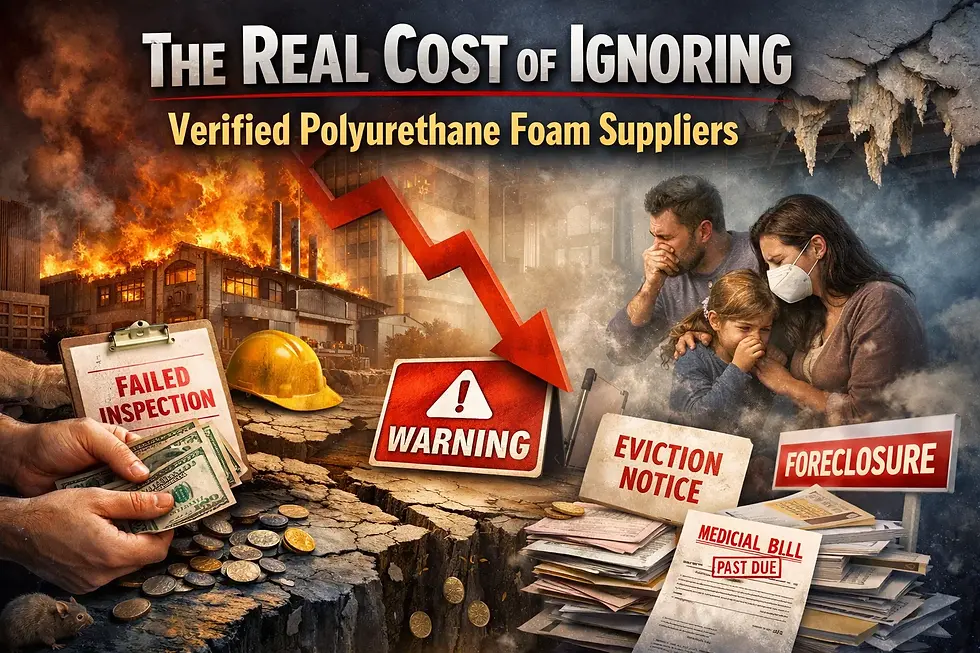
Many businesses only realize the impact after facing repeated quality issues or operational disruptions. By then, the financial and reputational damage is already done.
This article explores the real cost of ignoring supplier verification, why it happens, and how experienced buyers approach sourcing to avoid these pitfalls.
What “Verified” Really Means in B2B Sourcing
Verification is not just about checking credentials. It is about confirming that a supplier can consistently meet expectations.
Beyond Basic Certifications
While certifications are important, they are only one part of the picture. True verification includes:
Process audits
Quality control evaluation
Production capability assessment
Historical performance review
Suppliers may hold certifications but still fail to deliver consistent results.
Operational Transparency
Verified suppliers are transparent about:
Raw material sourcing
Manufacturing processes
Testing methods
This transparency allows buyers to assess risk more accurately.
The Immediate Risks of Ignoring Verification
Choosing unverified suppliers often leads to short-term convenience but long-term complications.
Inconsistent Product Quality
Without proper verification, quality becomes unpredictable. This can result in:
Variation in foam density
Reduced durability
Performance failures under stress
These issues often appear only after the product reaches the customer.
Increased Rejection Rates
Inconsistent materials lead to higher rejection rates during production or quality checks. This disrupts workflows and increases operational costs.
Delayed Deliveries
Unverified suppliers may lack the infrastructure to meet deadlines consistently. Delays in material supply can halt production and impact delivery commitments.
The Hidden Financial Impact
The true cost of poor sourcing decisions goes far beyond the initial purchase price.
Cost of Rework and Replacement
Defective materials often require:
Reprocessing
Replacement orders
Additional labor
These costs accumulate quickly and reduce profitability.
Logistics and Handling Losses
Poor-quality foam can degrade during transit, leading to:
Damaged goods
Increased packaging requirements
Higher shipping costs
This is why many businesses rely on foam packaging material suppliers who understand the demands of logistics and export conditions.
Customer Returns and Complaints
When products fail, customers notice. Returns and complaints lead to:
Refunds or replacements
Increased customer service workload
Loss of repeat business
Over time, this impacts brand trust.
Operational Disruptions and Their Long-Term Effects
The impact of unreliable suppliers extends into daily operations.
Production Inefficiencies
Inconsistent materials create challenges in manufacturing processes, such as:
Machine recalibration
Increased downtime
Higher defect rates
These inefficiencies reduce overall productivity.
Inventory Management Challenges
Unreliable supply forces businesses to:
Maintain excess inventory
Adjust production schedules frequently
Manage uncertainty
This ties up capital and reduces flexibility.
Strained Internal Teams
Procurement, quality control, and production teams often bear the burden of supplier-related issues. This can lead to:
Increased workload
Reduced morale
Slower decision-making
Why Businesses Still Ignore Verification
Despite the risks, many organizations continue to overlook supplier verification.
Price Pressure
Cost remains a major factor in procurement decisions. Lower prices can be tempting, especially for SMEs operating on tight margins.
However, this often leads to higher total costs in the long run.
Urgency and Time Constraints
In fast-moving environments, businesses may prioritize speed over due diligence. This results in:
Skipping audits
Limited testing
Quick supplier onboarding
These shortcuts increase risk.
Lack of Structured Procurement Systems
Without a defined sourcing process, decisions become inconsistent. Verification steps are often overlooked or applied unevenly.
The Role of Digital Sourcing in Supplier Verification
Digital tools are changing how buyers evaluate suppliers.
Access to Verified Data
Online platforms provide insights into:
Supplier certifications
Customer reviews
Operational capabilities
This improves transparency and reduces information gaps.
Faster Evaluation Processes
Digital systems allow buyers to:
Compare suppliers efficiently
Track performance metrics
Monitor compliance
This supports more informed decision-making.
Integration with Procurement Workflows
Modern systems integrate supplier data with procurement processes, enabling:
Better risk assessment
Continuous monitoring
Improved accountability
Practical Steps to Avoid Costly Mistakes
Avoiding the risks of unverified suppliers requires a structured approach.
Conduct Thorough Supplier Audits
Evaluate suppliers based on:
Process standardization
Quality control systems
Production capabilities
This helps identify potential issues early.
Implement Multi-Level Testing
Testing should include:
Initial sample evaluation
Batch-level verification
Real-world performance testing
This ensures consistency over time.
Establish Clear Quality Benchmarks
Define measurable criteria for:
Density and performance
Durability standards
Compliance requirements
Clear benchmarks reduce ambiguity.
Build Long-Term Supplier Relationships
Working with verified suppliers over time improves:
Consistency
Communication
Operational efficiency
Strong relationships reduce risk.
Shifting from Cost-Focused to Value-Focused Procurement
Modern B2B sourcing is moving toward value-based decision-making.
Total Cost of Ownership
Instead of focusing on initial price, buyers are evaluating:
Long-term performance
Maintenance and replacement costs
Impact on customer satisfaction
This provides a more accurate picture of value.
Risk Mitigation as a Priority
Reducing risk is now a key objective in procurement. Verified suppliers play a critical role in achieving this.
Strategic Sourcing
Businesses are adopting structured sourcing strategies that align with:
Growth objectives
Market demands
Operational capabilities

Conclusion
Ignoring supplier verification is not a small oversight—it is a strategic risk. The costs may not be immediate, but they are inevitable. From quality inconsistencies to operational disruptions, the impact spreads across the entire business.
In today’s competitive B2B environment, reliable sourcing is a necessity, not a choice. Businesses that invest in verification, testing, and long-term supplier relationships are better positioned to navigate market challenges and sustain growth.
Working with dependable industrial packaging foam suppliers and adopting a disciplined procurement approach ensures that quality, consistency, and reliability are built into the supply chain from the start.
FAQs
1. What does supplier verification involve?
It includes audits, quality checks, capability assessment, and reviewing past performance to ensure reliability.
2. Why is ignoring verification risky?
It leads to inconsistent quality, operational disruptions, and higher long-term costs.
3. How can businesses verify suppliers effectively?
Through audits, sample testing, documentation review, and continuous performance monitoring.
4. Is supplier verification necessary for small businesses?
Yes. SMEs are often more vulnerable to supply chain disruptions, making verification even more important.


Comments