Wires Suppliers Ensuring Steady Stock for Industrial Buyers
- Aarav Reddy
- Nov 20, 2025
- 4 min read

Production schedules are tighter. Project pipelines are more complex. And downtime caused by material shortages can derail entire operations. This is why dependable Wires Suppliers have become central to the way industrial procurement teams plan, negotiate, and execute large-volume sourcing.
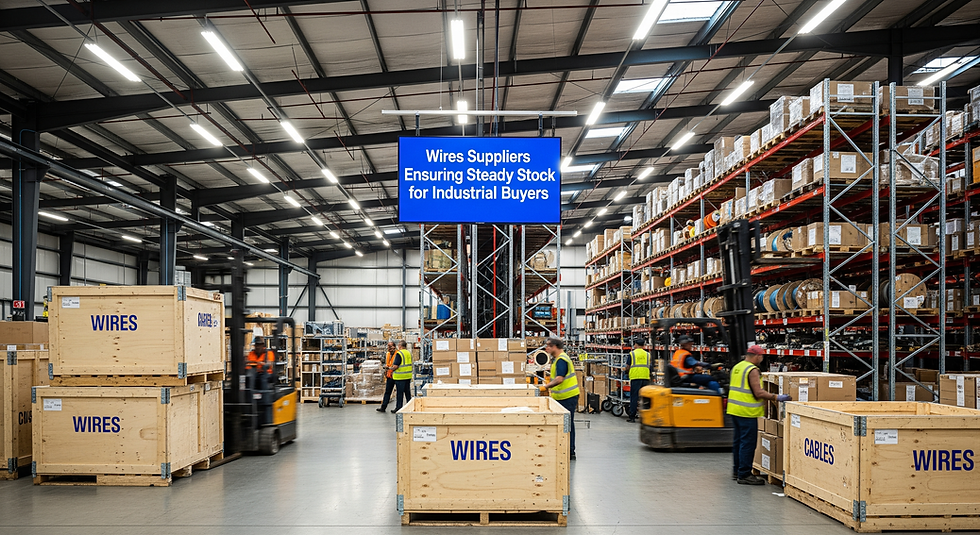
From my years guiding SMEs and industrial buyers across manufacturing, energy, and infrastructure sectors, one truth has stayed consistent: reliable wiring supply isn’t just a convenience—it’s operational insurance. A supplier that consistently maintains stock can prevent cost overruns, minimize interruptions, and strengthen a buyer’s long-term competitiveness.This article explores how suppliers build stock resilience, what industrial buyers should evaluate, and the operational practices that set dependable partners apart.
The Real Pressure Behind Industrial Procurement
Industrial procurement comes with unique challenges that smaller buyers rarely encounter. These include multi-phase project planning, high-volume demand, strict engineering requirements, and long-term contractual commitments. When wiring supply becomes inconsistent, the ripple effect hits every part of production—from assembly lines to field installations.Because of this, industrial buyers must prioritize suppliers capable of maintaining resilient inventory systems year-round. It’s not simply about availability; it’s about predictability and stability in environments where delays can cost millions.
Understanding the Need for Continuous Stock Availability
Large industrial operations rely on uninterrupted supply for a reason: activities must progress without material shortages. This requires suppliers to maintain robust inventory that supports recurring, fast-moving demand.Key factors driving steady stock needs include:
Rapid project cycles in construction and infrastructure
Seasonal demand fluctuations in manufacturing
Replacement cycles for maintenance-heavy industries
Long-term contractual obligationsSuppliers who anticipate buyer requirements instead of reacting to them become invaluable in high-pressure environments.
Inventory Planning: The Backbone of Supplier Reliability
Reliable suppliers invest heavily in predictive inventory planning. This isn’t guesswork—it’s data-driven stock control based on buyer history, industry cycles, and material lead times.Strong inventory practices include:
Demand forecasting using project timelines
Reserved buffer stock for priority buyers
Regular replenishment schedules
Transparent stock reportingThese strategies reduce lead-time variability and help industrial buyers plan with confidence.
Material Readiness and Stock Buffering
One of the biggest advantages of dependable suppliers is their ability to maintain strategic buffer stock. This ensures industrial buyers receive their orders even when global material availability tightens.Stock buffering is supported by:
Strong relationships with upstream manufacturers
Multi-tier storage facilities
Faster replenishment cycles
Contingency sourcing arrangementsIndustrial buyers increasingly rely on buffer-stock-ready suppliers to handle last-minute volume surges.
Warehouse Capacity and Multi-Location Storage
For suppliers serving industrial markets, warehouse capacity directly influences their ability to maintain consistent stock. Multi-location storage sites further enhance reliability by spreading inventory across regions.This provides three main benefits:
Faster delivery times
Reduced shipping risks
Lower disruption from local shortagesFor industrial buyers managing strict installation timelines, this multi-site advantage can drastically reduce logistical bottlenecks.
How Logistics Strength Impacts Delivery Reliability
Steady stock is only one part of the equation. Suppliers must also have dependable logistics systems to ensure buyers receive materials when expected.Key logistics capabilities include:
Scheduled dispatch cycles
Load optimization for bulk orders
In-transit tracking
Reliable carrier partnershipsIndustrial procurement teams value suppliers who maintain transparency, especially for high-volume shipments where timing affects production continuity.
Supplier Readiness During Demand Surges
Whether it’s infrastructure booms, industrial expansion, or seasonal peaks, demand surges can strain supply chains. Reliable suppliers prepare for these shifts through:
Surge-capacity stock storage
Priority allocation programs
Faster procurement cycles
Enhanced coordination with buyersThe suppliers who remain stable during these surges often become preferred long-term partners.
Assessing Supplier Quality Beyond Stock
While stock availability is crucial, industrial buyers must still evaluate quality systems that ensure safe and consistent wiring products. This includes:
Compliance with global electrical standards
Test reports and certification documentation
Batch consistency measures
Anti-counterfeit controlsStrong suppliers build trust by offering transparency at every level.
Collaborative Planning Between Buyers and Suppliers
In my experience, the strongest supplier relationships are built through collaborative planning. When buyers communicate early project details, suppliers can adjust stock, align production schedules, and secure raw materials in advance.This creates:
Lower risk of shortages
Predictable cash flows for both parties
Smoother procurement cyclesOpen communication is one of the most effective risk-reduction tools available.
Technology’s Role in Strengthening Supplier Reliability
Modern suppliers increasingly rely on digital systems to enhance their readiness. This includes:
Real-time inventory dashboards
Automated restocking alerts
Demand forecasting tools
Integrated logistics platformsThese technologies help suppliers maintain consistent stock while supporting industrial buyers who need accurate planning data.
Evaluating Long-Term Supplier Stability
For industrial buyers, the question isn’t just who can supply today—it’s who can support multi-year projects. Evaluating long-term stability involves reviewing:
Financial health
Historical delivery performance
Investment in warehousing and logistics
Material sourcing partnershipsThis long-range assessment ensures buyers select partners who won’t falter under pressure.
The Body Keyword Placement
For buyers focused on securing consistent delivery cycles, dependable Cables Wholesalers often serve as essential partners for maintaining predictable inventory flow within large-scale operations.
Why Industrial Buyers Prefer Suppliers with Redundant Systems
Suppliers with backup systems—secondary warehouses, alternative carriers, multiple material sources—reduce the risk of interruption. Redundancy isn’t a luxury for industrial procurement; it’s a necessity.This level of preparedness ensures consistent operations even when unforeseen disruptions occur.

Conclusion
Industrial buyers depend on suppliers who prioritize continuity, precision, and foresight. The most reliable partners maintain resilient stock systems, transparent logistics, and data-driven inventory planning that keep industrial operations running without interruption. When evaluating long-term procurement strategies, buyers should focus on suppliers equipped for consistency, adaptability, and operational maturity. To explore dependable sourcing options for large-scale needs, visit trusted Wires Exporters offering stable, long-term support.
FAQs
1. How do suppliers maintain steady stock for industrial buyers?They use forecasting tools, maintain buffer stock, and establish reliable upstream sourcing networks.
2. Why is warehouse capacity important for supplier reliability?Larger and multi-location warehouses help suppliers store more material and deliver orders faster.
3. What should industrial buyers evaluate before choosing a supplier?Stock consistency, logistics capability, compliance documentation, and long-term stability.
4. How do suppliers handle sudden demand surges?Through surge-capacity planning, rapid restocking cycles, and priority allocation systems.


Comments